
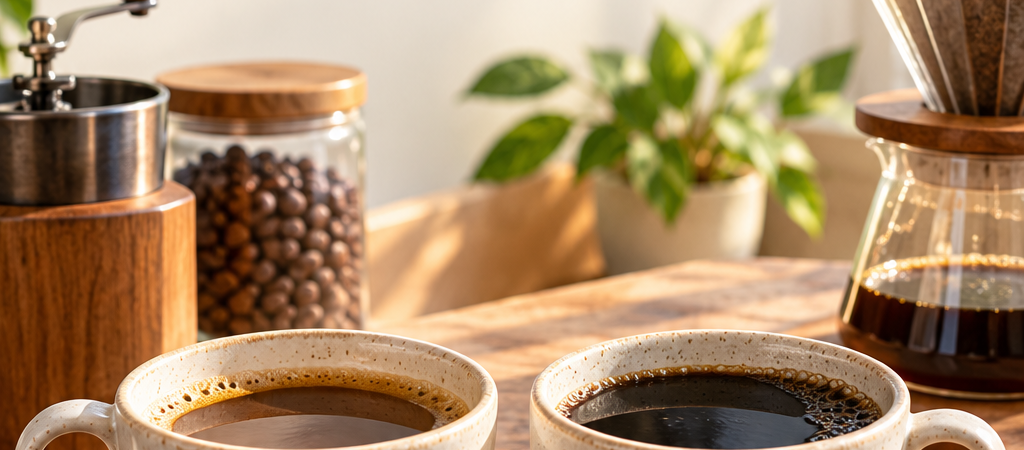
When a cup of coffee tastes sharply sour, harshly bitter, weak, or flat, the beans are not always the problem. Small changes to grind size, brew time, water temperature, and coffee-to-water ratio can transform the same coffee.
This practical troubleshooting guide will help you identify what went wrong and adjust one variable at a time for a more balanced cup.
Quick coffee taste diagnosis
- Sour, sharp, or salty: Coffee is often under-extracted. Water did not dissolve enough flavor from the grounds.
- Bitter, dry, or astringent: Coffee may be over-extracted, brewed too hot, or made with a very dark roast.
- Weak or watery: The ratio may use too little coffee, the grind may be too coarse, or the brew time may be too short.
- Flat or dull: Beans may be stale, water quality may be poor, or brewing equipment may need cleaning.
Why coffee tastes sour
Sour coffee usually points to under-extraction. The water has pulled out bright acids but not enough sweetness and deeper flavor to balance them. Light-roast coffee can naturally taste fruity or bright, so the goal is balance—not removing all acidity.
How to fix sour coffee
- Grind a little finer. Smaller particles give water more surface area and help it extract more flavor.
- Brew a little longer. For immersion methods such as French press, add 20 to 30 seconds. For pour-over, a finer grind will usually slow the drawdown.
- Use hotter water. Try water around 195–205°F (90–96°C). Very cool water can leave coffee under-extracted.
- Check your ratio. A reliable starting point is 1 gram of coffee for every 16 grams of water.
- Pour evenly. In pour-over brewing, wet all the grounds and avoid pouring only in the center.
Why coffee tastes bitter
Bitterness can come from over-extraction, but roast level matters too. Dark roasts naturally have more roasted and smoky flavors. If bitterness is unpleasant, make a small brewing adjustment before changing beans.
How to fix bitter coffee
- Grind a little coarser. This reduces extraction and can soften harsh flavors.
- Shorten the brew time. Do not let a French press sit too long, and remove it from the grounds after plunging.
- Lower the temperature slightly. For a dark roast, try water closer to 190–195°F (88–90°C).
- Clean the brewer and grinder. Old coffee oils can become rancid and add harsh bitterness.
- Avoid reheating brewed coffee. A hot plate can make coffee taste increasingly cooked and bitter.
What to do when coffee tastes weak or watery
Start with a measured recipe instead of guessing. For one large pour-over or drip cup, try 20 grams of coffee with 320 grams of water. If it still tastes weak, use slightly more coffee or grind a little finer. Check our coffee grind size guide for a method-by-method starting point.
What to do when coffee tastes flat
Use freshly roasted beans when possible and grind just before brewing. Store beans away from heat, light, air, and moisture. Filtered water often tastes better than heavily chlorinated tap water, but completely distilled water can also make coffee seem dull because some minerals help extraction.
Residue matters, too. Wash removable brewer parts regularly and descale the machine according to its instructions. For storage help, see our guide to coffee storage containers.
A simple baseline recipe
- 20 grams freshly ground coffee
- 320 grams filtered water
- Water temperature: 195–205°F (90–96°C)
- Medium grind for automatic drip; medium-fine for most pour-over brewers
Taste the result, then change only one thing. If it is sour, grind finer. If it is bitter and drying, grind coarser. Keeping the coffee dose and water amount consistent makes each test meaningful.
Common questions
Can coffee be both sour and bitter?
Yes. Uneven extraction can create both flavors in the same cup. This often happens when water channels through some grounds while leaving others under-extracted. Improve grind consistency, distribute grounds evenly, and pour more evenly.
Does adding more coffee fix sourness?
Not always. More coffee can make the drink stronger without correcting extraction. Adjust grind size or brew time first while keeping a consistent ratio.
Is bitter coffee always over-extracted?
No. A dark roast, stale coffee oils, or coffee left on a hot plate can also taste bitter. Consider roast level and equipment cleanliness before changing every brew setting.
The easiest way to improve your next cup
Write down your coffee dose, water amount, grind setting, temperature, and brew time. Change one variable at a time and take a quick taste note. That simple habit makes better coffee repeatable instead of accidental.